nicoletaionescu/Getty Images
I don’t recall when I applied to become a checker at a grocery store. In fact, I’m fairly certain I am a writer by trade and have never worked in a grocery store, honorable work though it may be.
And yet it seems most stores I wander into to make a purchase have enlisted me to check out my groceries.
Well, I QUIT this unsought job I've been shanghaied into.
The self-checkout machine has been around longer than you might think.
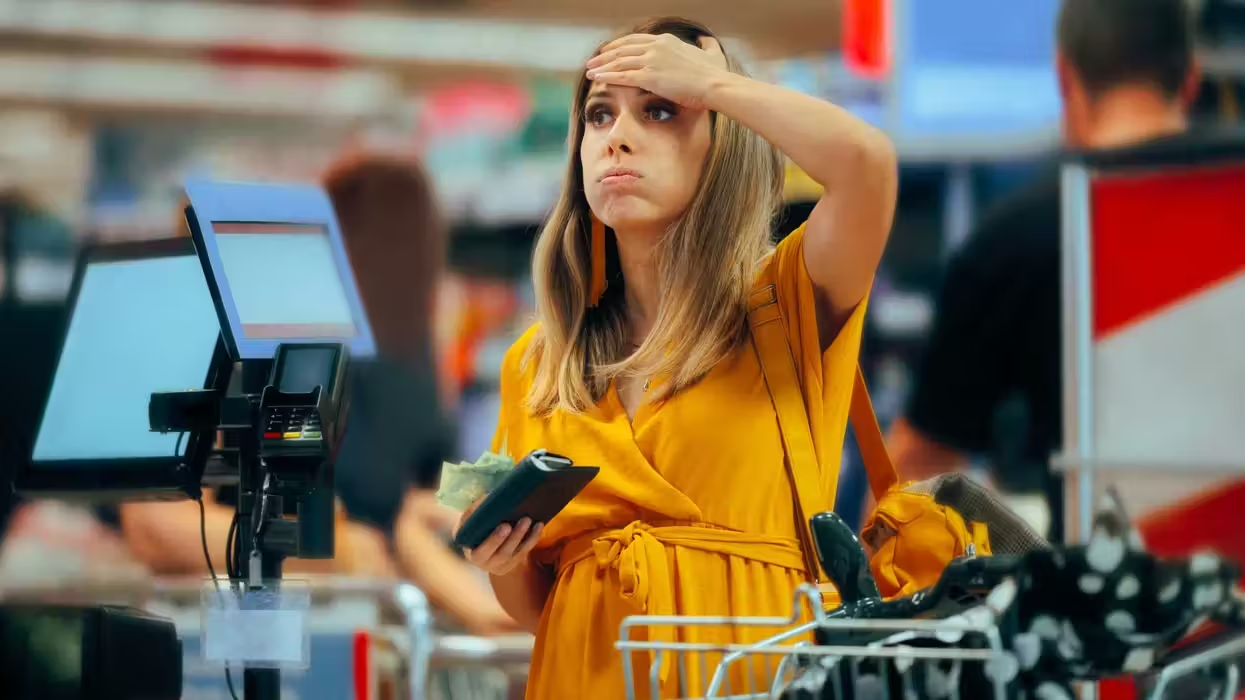
I had that thought once again recently, standing beneath the cold fluorescent lights of a large American retailer, attempting to make my purchase — avocados, paper towels, toothpaste, and a package of hamburger — from a machine that clearly regarded me as a criminal. It beeped red and sounded an alert as if a thief were attempting to steal the Mona Lisa. After what seemed like an eternity, a bored, obese woman with four-inch nails ambled over to look me up and down and punch numbers into the screen.
No, I thought. Your look of annoyance notwithstanding, no — I’m not a grocery store checker, and I have no clue how your machine works.
Last year, the day before Thanksgiving, I found myself in an unsurprisingly packed grocery store with only one lane open. I guessed the implication was that everyone with full carts needed to scan them themselves. I watched the cattle plod their way to automated slaughter. How long can we continue this way and remain Americans?
The machines never work. There’s a never-ending requirement for some person to come unlock them (because you didn’t scan the Coke correctly). Half the time, they don’t even provide bags to put your food in. Never mind if you make the mistake of trying to buy fruits or vegetables; you have to scroll through screens to find what you want to buy. Guess what: those organic apples? I’m scanning them as regular old Galas. Oh, is that not right? Maybe you should have someone working here then.
When did we decide that companies could just jettison their workforce and have their customers fill in the slack? Are we going to start waiting and bussing our own tables? Well, there’s actually an entire genre of “restaurants” doing just that. Maybe we can save money by performing our own surgeries? Actually, let’s not give them any ideas.
The self-checkout machine has been around longer than you might think. One of the earliest recognizable systems appeared in a Kroger outside Atlanta in 1986. The idea was simple enough. Barcode technology had already transformed the supermarket. If a machine could read the barcode, why did an employee have to hold the box of Cheerios over the scanner?
For retailers, the appeal was obvious. Of course, they never asked customers how they felt about this.
Grocery stores are enormous businesses built on small margins. Labor is expensive, and checkout labor is particularly irritating from a management perspective because demand comes in waves. A store might need a small army of cashiers at 5:30 on a Friday afternoon and only a handful two hours later. Hire enough people for the rush, and you are paying workers to stand around during slow periods. Staff for the slow periods, and customers abandon carts when the lines stretch halfway down the cereal aisle.
RELATED: A huge pagan statue just went up in Texas. Is this the Western civilization we should be cheering?
 Darko Mlinarevic/Getty Images
Here’s the thing: That’s a faceless corporation's problem. I want to avoid becoming a team member at Kroger just to buy my groceries. A normal checkout lane required a human being. Eight lanes required eight human beings. Human beings are expensive and troublesome creatures. They need wages. They take lunch. They get sick. They quit. Some even expect health insurance. So, as with almost every bit of technology in our lives, it made our lives worse by outsourcing it to ourselves. All those low-level jobs, I’m guessing, were very important to those employees sacrificed on the altar of corporate greed.
There was another function, harder to place on a corporate spreadsheet.
The cashier was a person.
For most people, that hardly mattered. The interaction might consist of nothing more than "How are you?" and "Have a good one." But those tiny exchanges accumulated into something that once characterized ordinary American life. The butcher knew what cut you liked. The bartender remembered your drink. The hardware-store clerk knew which screw you needed. The grocery cashier asked about your kids.
Commerce involved people because life involved people.
The self-checkout machine represents a different vision. It is efficient, anonymous, and frictionless when everything works. The ideal transaction requires no conversation at all. Enter the store, locate the product, scan it, tap the screen, and leave. God forbid you have to talk to another human being. For years now, chains have known that error rates are high, shoplifting is up, and popularity is in the tank. Apparently, companies are considering scaling them back. Schadenfreude, I say. But will they ever go away? Or will the America we love disappear first?
Consider this, then, my two weeks' notice. I refuse to scan my own products any more. From now on, even if it means I have to harass a manager to open a lane, I’m deciding to check out of doing unpaid labor. I choose the humans over the machines.