SOPA Images/William West/Estrop/John Phillips/Francois Guillot/Getty Images
Filmmaker and mother Jessica Solce was frustrated by the difficulty of finding healthy, all-natural products for herself and her family. To make it easier, she created the Solarium, a curated marketplace for third-party-tested foods, clothing, beauty products, and more — free of seed oils, endocrine disruptors, carcinogens, and other potentially harmful additives.
In this occasional column, she shares recommendations and research from her continuing education in health and wellness.
Every time I return to my parents' home, I find myself standing in my mother's closet.
My parents are moving, and I'm helping. Just as when I was a kid, I still take pleasure in running my hands across the fabrics of my mother's clothes. Everything is silk, cotton, wool. Sturdy, perfectly kept, and just as soft and vibrant as they were 40 years ago.
Acrylic or polyester becomes 'faux fur'; polyurethane or PVC becomes 'vegan leather.' The language makes the substitution sound almost virtuous.
What isn't in her closet is just as striking. It isn't overflowing with heaps of disposable fashion bought for a season and forgotten. Everything seems chosen — the accumulation not of endless consumption but of decades of taste and considered decisions. She bought things she liked, cared for them, and kept them.
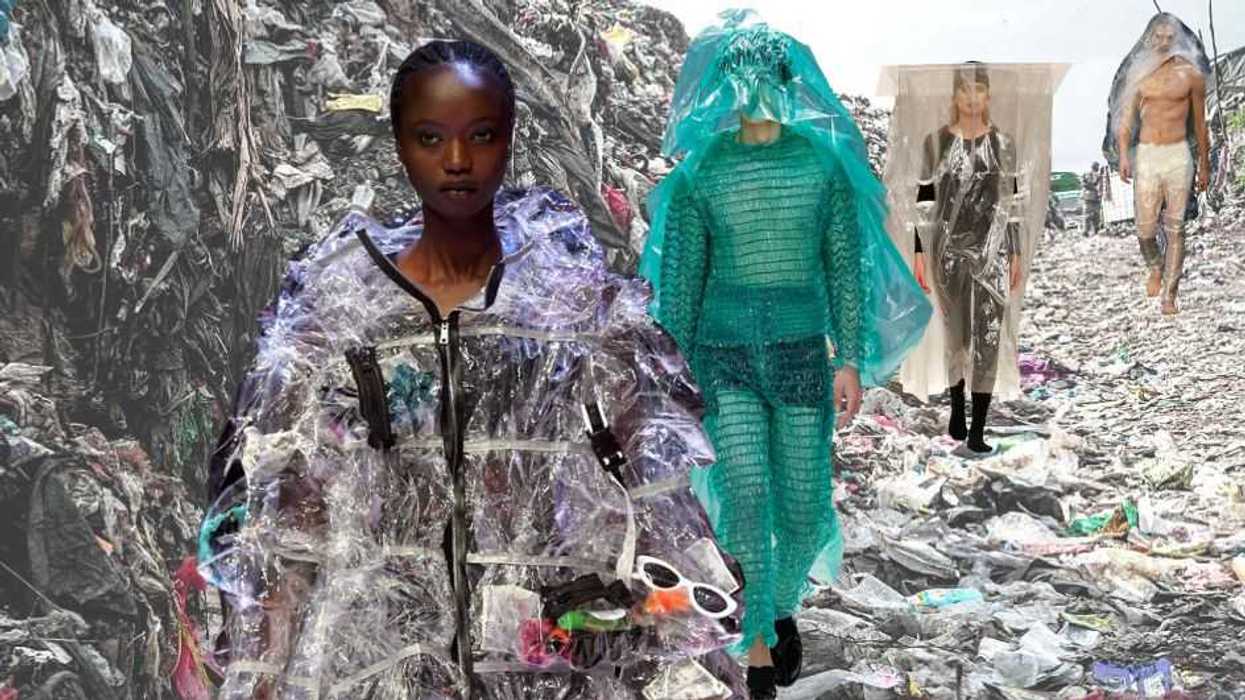
This kind of restraint is out of style. Modern closets can be filled cheaply and frequently, thanks to synthetic fibers. Polyester, nylon, and acrylic are inexpensive to produce, easy to care for, and endlessly adaptable — and we embraced them. What is stranger is how even luxury fashion followed. Materials once prized precisely for their natural beauty — silk, wool, linen, cashmere, leather, and fur — increasingly share racks and runways with petroleum-derived fabrics. We've gained an astonishing abundance of clothing while losing some of the tactile abundance that made clothing worth keeping in the first place.
The transformation began nearly a century ago. In 1935, DuPont chemist Wallace Carothers produced nylon, the first fully synthetic fiber to become a consumer product. Nylon is a plastic, made from petrochemical-derived polymers, but it could be spun into fibers that looked and behaved like textiles.
Nylon's first great consumer success was women's stockings, and the appeal was obvious. Silk stockings were expensive, delicate, and prone to runs. Nylon promised something stronger, cheaper, and easier to care for. Women loved them: When DuPont introduced nylon stockings nationwide in 1940, nearly 800,000 pairs sold on the first day.
The appeal wasn't hard to understand. Silk was expensive and delicate. Nylon was strong, inexpensive, and practical. Soon, other synthetics offered similar promises: Polyester resisted wrinkles, and later synthetic blends offered stretch, moisture-wicking, and easy washing.
RELATED: Finally: Vaccine guidelines that make sense for parents
 Creative Commons/H. Armstrong Roberts/Classicstock/Getty Images
Consumers had perfectly good reasons to want these new fabrics. But somewhere along the way, convenience made us lose sight of the qualities that made natural materials beautiful in the first place.
Acrylic, for example, could imitate wool at a fraction of the price, without the moths or troublesome washing. But the bargain came with costs: Acrylic retains odors more readily, generates static, manages moisture poorly, and can melt when exposed to flame. A good wool sweater can still look beautiful decades later. Anyone who has owned a cheap acrylic sweater knows that isn't always true of its substitute.
What few people standing at a department-store counter in 1940 could have imagined was the scale to which synthetics would come to dominate the clothes we wear. Polyester alone accounts for roughly 59% of global fiber production. We have reached the point at which much of the clothing touching our skin every day is made principally from plastic.
That has consequences far beyond the feel of a shirt. Synthetic textiles shed microscopic plastic fibers as they are manufactured, worn, washed, and dried. Researchers have found these fibers in wastewater, household dust, and indoor and outdoor air. A fleece jacket doesn't cease being plastic because it has been transformed into something soft enough to wear.
Yet we have developed increasingly flattering language for the substitution. Fur and leather, natural materials used by human beings for millennia, are increasingly treated as environmentally or ethically suspect. Replace them with petroleum-derived synthetics, however, and plastic acquires more flattering names. Acrylic or polyester becomes "faux fur"; polyurethane or PVC becomes "vegan leather." The language makes the substitution sound almost virtuous.
Recycling has helped make plastic similarly easier to embrace. Turning discarded bottles into clothing can reduce the demand for new petroleum-derived material, but it doesn't make the plastic disappear. A recycled-polyester shirt can still shed synthetic fibers, and at the end of its useful life, it presents many of the same disposal problems as other synthetic textiles.
Then there is the more complicated question of what all this means for our bodies.
No one anticipated the emerging health problem of microplastics. Synthetic fibers like polyester, nylon, spandex, and acrylic constantly shed microplastic particles. These particles can contain or carry chemicals, including PFAS — the persistent “forever chemicals” used in some water- and stain-resistant textiles — phthalates, dyes, and flame retardants, some of which are known or suspected endocrine disruptors. The fibers themselves can be inhaled or ingested, while researchers continue to investigate the extent to which chemicals associated with them enter the body through different routes.
Studies have found that chemicals released from textile microfibers may contribute to effects including hormonal disruption, immune stress, and oxidative damage. Other research has linked exposure to certain endocrine-disrupting chemicals, including some used in plastics and textiles, with effects on male reproductive health.
Exactly what ordinary exposure to microplastics means for human health over a lifetime remains an active area of research. The ubiquity of plastics is nevertheless a profound environmental problem affecting the globe.
So what do we do?
We don't have to empty our closets tomorrow, and we aren't going to eliminate synthetic materials from modern life. They have legitimate uses, and in some circumstances, they are remarkably useful.
But we can begin paying attention again.
We can look at the tag before buying a sweater. We can choose wool instead of acrylic, linen instead of polyester, cotton instead of a synthetic blend when those choices make sense. We can buy fewer things and expect more from them. We can seek out manufacturers that tell us what their products are made from and make things intended to survive more than a season.
Consumer choice helped make the world we have, and I believe it can help change it. Every decision to buy something made from natural materials, to choose something made well enough to keep, or simply to refuse another disposable product creates demand for something better.
That belief is part of what led me to create the Solarium. I wanted to make it easier to find the foods, clothing, and everyday products I was already searching for myself — and to connect people with the makers and producers who are still trying to do things well. If convenience helped lead us away from many of these things in the first place, perhaps we can make choosing them convenient again.
And perhaps buying less, choosing better, and keeping things longer isn't a retreat from progress. It's a way of caring for the world we actually inhabit.
My mother's closet offers a small reminder of what that can look like. Those clothes have been kept for decades because they were worth keeping. Someone chose the fabric carefully. Someone made the garment to last. And because it lasted, someone cared enough to preserve it.
That relationship between maker, material, and owner once seemed ordinary. Perhaps it can again.