Glen Asakawa/Getty Images
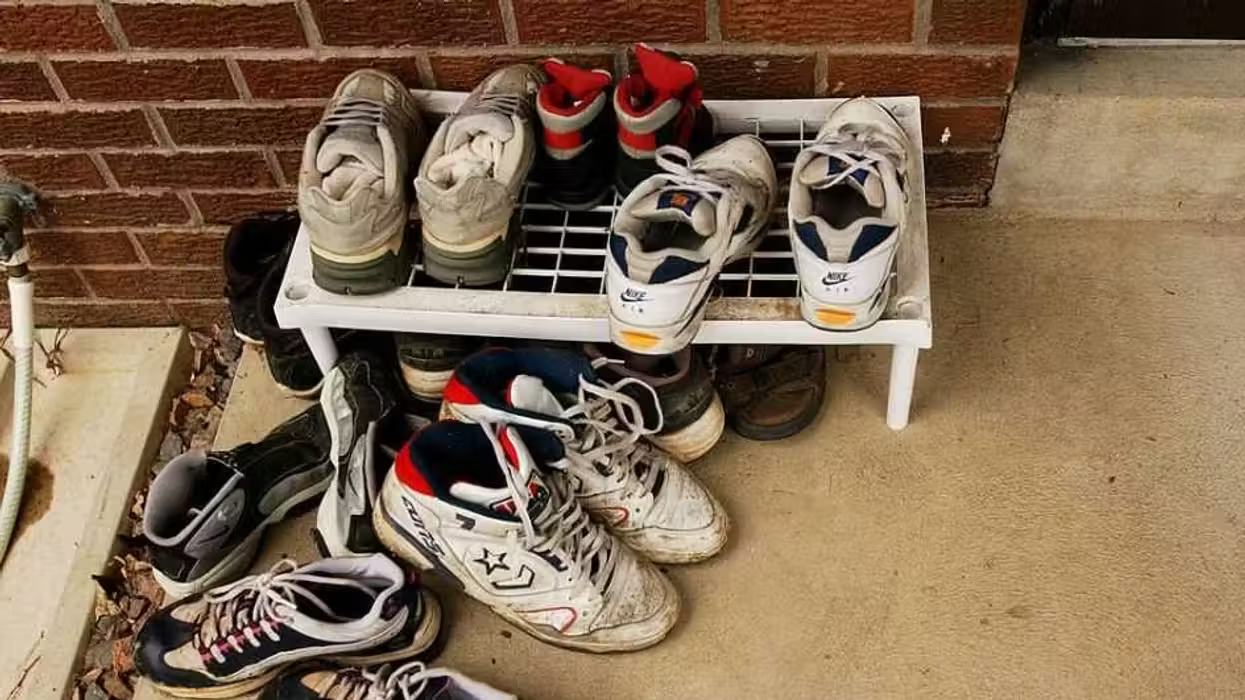
Do you wear shoes in the house?
Or do you remove them every time you open the front door, place them tidily next to the closet, and proceed into your humble abode with only a thin layer of sock between your foot and the floor?
What does it mean that most households in America today are shoes-off households? Why is there a change?
This question of indoor footwear, or lack thereof, is a surprisingly interesting one. You might think it doesn’t really matter that much whether or not your shoes stay on while inside, but it is a somewhat fascinating little debate for the acute observers of our perpetually evolving American culture.
There are a few different ways to view the shoes-in-the-house debate. The first layer is that of personal preference. For lots of families in America, it comes down to a mundane choice. Mom and dads on a random weekday just sort of come to the conclusion that they are going to either be a shoes-on or shoes-off household, and that’s what they do for the rest of their lives together. For others the decision is an inherited one. They grew up keeping shoes on, so that’s what their kids grow up doing. We do what we are used to; it’s tradition.
Beyond the simple choice of personal taste, there are geographical ways of looking at the question of rubber soles on wood floors. There are regional factors at play. The U.S. is a big place with lots of different climates, and taking shoes off or keeping them on wavers a bit from region to region. For those in the sloshiest and snowiest ares of the U.S., keeping your boots on inside in the middle of February is a nonstarter. For others, in the drier regions, keeping shoes on isn’t particularly concerning whether it’s July or February.
There are also global differences in the answer to the question of shoes inside the house. I should say it’s a bit hard to get reliable data on global attitudes regarding this question. All the maps you find are slightly different, and the sources aren’t exactly clear. I mean, what’s this polling really like? But taking account of all the available maps, the very west end of Western Europe, North America, Central America, and South America tend to be shoes-on, and the rest of the world is generally shoes-off with a few exceptions.
Last but not least, a final aspect to this discussion is one of American history. Have you ever seen a photo of a family gathering or party in America during the 1950s in which the majority of adults are sitting or standing around inside without their shoes on?
Probably not, and if you have, it’s an exceedingly rare photo of an equally rare occurrence. Back in old America — think 1800-1950 — people kept their shoes on inside. The thought of a group of adult men and women sitting around showing their dirty socks to one another would be very preposterous, extremely undignified, and generally rude. No one was asking people to take their shoes off at the door in 1958 America.
Though America is still considered a shoes-on country by many foreigners, things have changed. There is a trending line running toward socks on the floors and shoes by the doors.
What does it mean that most households in America today are shoes-off households? Why is there a change? And what has brought it about?
It’s hard to say. Some might argue that increased immigration from countries where shoes-off is the norm has changed attitudes in America without people realizing their attitudes are being changed. I think there could be truth to this. Immigration obviously brings unforeseen impacts, though I’m not sure many Midwesterners are really that influenced by Asiatic household footwear norms. Any influence due to immigration is probably minimal when it comes to this very narrow matter.
RELATED: Yes, groceries are more expensive. Now what?
 Bloomberg/Getty Images
I think any change toward an increase in more shoes-off households comes more broadly from an increasing informality that has spread through our culture over the past four decades. People are now comfortable showing their bare socks and requesting others do the same when visiting their home.
Is that a good thing? Is it a sign of a closer community or a more generally friendly and approachable disposition?
I don’t know. Maybe, but probably not. People are not closer today than they were in the past. They know their neighbors less, community bonds are weaker, and social satisfaction is down. Robert Putnam's 2000 book "Bowling Alone" documents all this well. The fact that more people host parties and request that guests take off their shoes says more about increased informality and less about closeness.
Changing opinions about cleanliness play a role in this evolution. For some reason today, people really do not want any dust or dirt tracked into the entryway to their house. It’s not unreasonable to want a clean house. We all do. I have three kids in a small home and know how messy it can get. But brooms and vacuums exist, and they work. People certainly seem more concerned about any possible dirt being tracked in than they did a few generations ago.
I don’t think there’s an objectively right or wrong way. Shoes-on houses are good, and so are shoes-off ones. Though I do think it’s worthwhile to wonder what cultural changes signify, because they often mean more than what meets the eye. And no matter how logical it might be to remove shoes so as to keep a house cleaner, the change from 1956 to 2026 says something about changing attitudes regarding formality and presentation in the American home, and it’s fair to wonder if those changing attitudes are related to broader developments in the society, many of which are not terribly good.
Is there some strange connection between requesting that guests remove their shoes and pajama pants in the airport? In the American context, probably yes.
As for me, I’ll keep wearing my sport coat at the airport and my loafers in the kitchen.