Andrew Harnik/Getty Images
Remember when the gasoline engine was living on borrowed time?
Automakers were announcing ambitious electric-vehicle plans, governments were setting targets and deadlines, and consumers were repeatedly told that the future of the automobile had already been decided. The only real question seemed to be how quickly we would get there.
Gasoline vehicles weren't merely going to lose market share. At some brands, they were supposed to disappear.
Cadillac was among the most aggressive. The company said it planned to become an all-electric brand by the end of this decade. Its own website still declares that every new Cadillac model introduced in the United States by the end of the decade will be electric.
Something interesting happened on the way to that all-electric future: People kept buying gasoline-powered cars.
So many, in fact, that Cadillac is preparing a whole new generation of them.
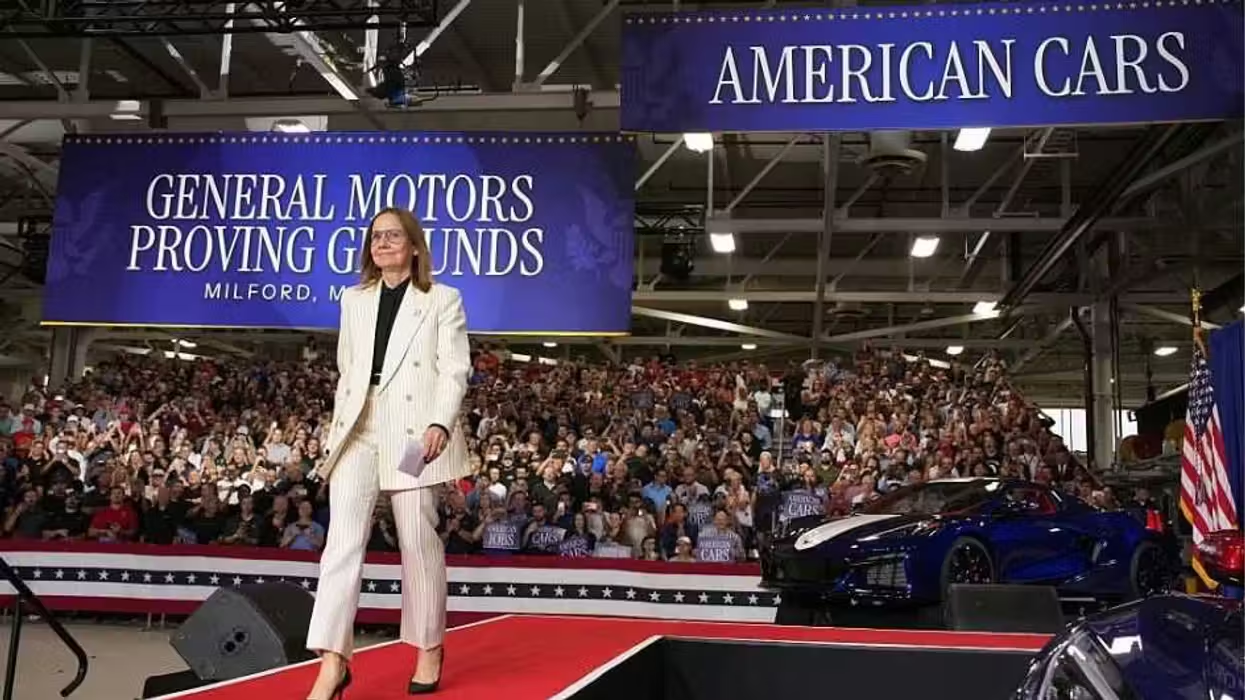
GM CEO Mary Barra confirmed this summer that Cadillac's next generation of internal-combustion vehicles will begin arriving in 2027. The lineup is expected to include a new CT5 sedan and new versions of the XT5 and XT6 crossovers. The XT6 is particularly interesting because Cadillac discontinued it after the 2025 model year. Now it's coming back with a gasoline engine.
The XT5 got a reprieve too. Cadillac had been expected to kill the gasoline-powered crossover but instead extended production of the current model and approved a new generation for the U.S. market. Cadillac said it was making "necessary adjustments" to its portfolio to meet customer demand.
There's that word again: demand.
Because while automakers have been adjusting their product plans, American EV sales have been sending a message of their own.
Look at August. Despite a record increase in hybrid sales, Kia sold just 712 EV6s, down 60% from August 2025. Hyundai sold 28 Ioniq 6 sedans — yes, 28 — a 97% decline. Its much more popular Ioniq 5 fell 51%.
Ford's numbers were even more dramatic. Mustang Mach-E sales fell 72.5% to 1,989 vehicles. Ford sold only 148 F-150 Lightnings, down 95% from the same month last year.
Honda sold 1,788 Prologues, down about 81% from August 2025. Honda has already confirmed that Prologue production will end after the 2026 model year.
Subaru's Solterra dropped almost 87%, although that one comes with a major caveat: Subaru's newer Trailseeker and Uncharted EVs helped push the company's total EV sales up for the month, and limited Solterra inventory may have contributed to its collapse.
That's why I wouldn't judge the EV market by one model or even one month's sales. Some of these vehicles are being discontinued. Others are being replaced. And August 2025 is an unusually difficult comparison because buyers were rushing to take advantage of the federal EV tax credit before it disappeared.
But zoom out and the picture is still striking. According to the National Automobile Dealers Association, battery-electric vehicles accounted for 10.1% of new-vehicle sales in August 2025. One year later, their share had fallen to 6.2%. Overall new-vehicle sales weren't collapsing either. August sales were actually up 1.5% from the previous year on a seasonally adjusted annualized basis.
So Americans didn't suddenly stop buying cars. They became less interested in buying EVs.
That doesn't mean the electric car is dead. Far from it. Cadillac currently offers five EVs, and manufacturers continue to spend billions developing electric vehicles. Some individual EVs are selling well, and Subaru's August numbers show exactly why you have to be careful about declaring an entire technology a failure because one nameplate plunges.
But that's very different from what consumers were being told just a few years ago.
The industry's transition to EVs was often presented as inevitable and, more importantly, imminent. Gasoline vehicles weren't merely going to lose market share. At some brands, they were supposed to disappear.
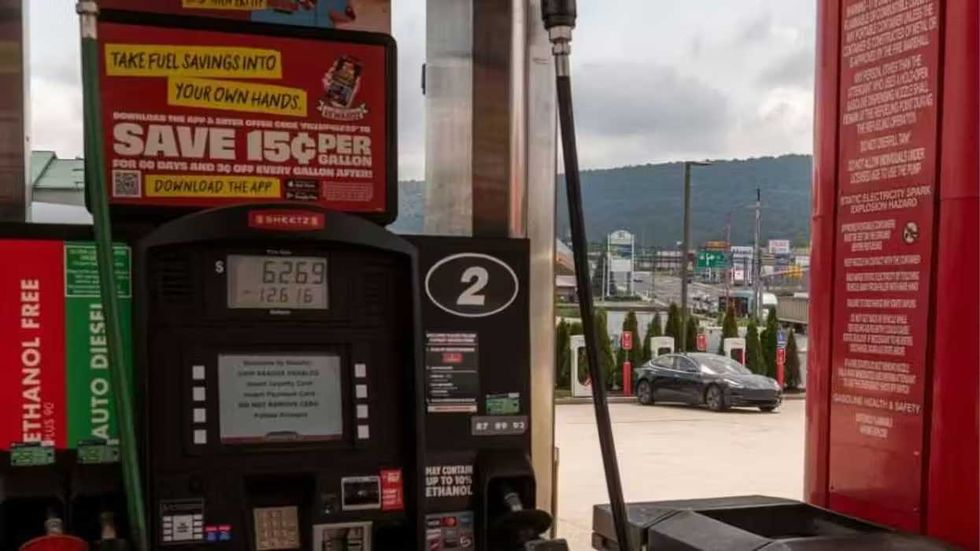
RELATED: Is charging your EV really cheaper than buying gas?
 Bloomberg/Getty Images
Cadillac is a wonderful example. It didn't merely say it wanted to sell more EVs. It said it planned to be all-electric by the end of the decade. Now the company is developing another generation of gasoline-powered Cadillacs that will arrive with only a few years left on that clock.
Why? Because car companies eventually have to sell cars.
Consumers don't buy corporate transition plans. They buy vehicles that fit their lives, budgets, and driving habits. For some people, that's an EV. For others, it's a hybrid. And plenty still want an ordinary gasoline-powered car or truck. Manufacturers are finally acknowledging that reality.
I don't have a problem with electric vehicles. Build good ones. Make them affordable. Improve the charging network. Give consumers enough range and enough choices, and let them decide whether an EV works for them.
What I object to is deciding the answer first and expecting the customer to fall in line afterward. The auto industry spent years telling us where the market was going. Now the market is talking back. And judging by the gasoline-powered Cadillacs headed our way, somebody in Detroit is finally listening.