Chip Somodevilla/Getty Images
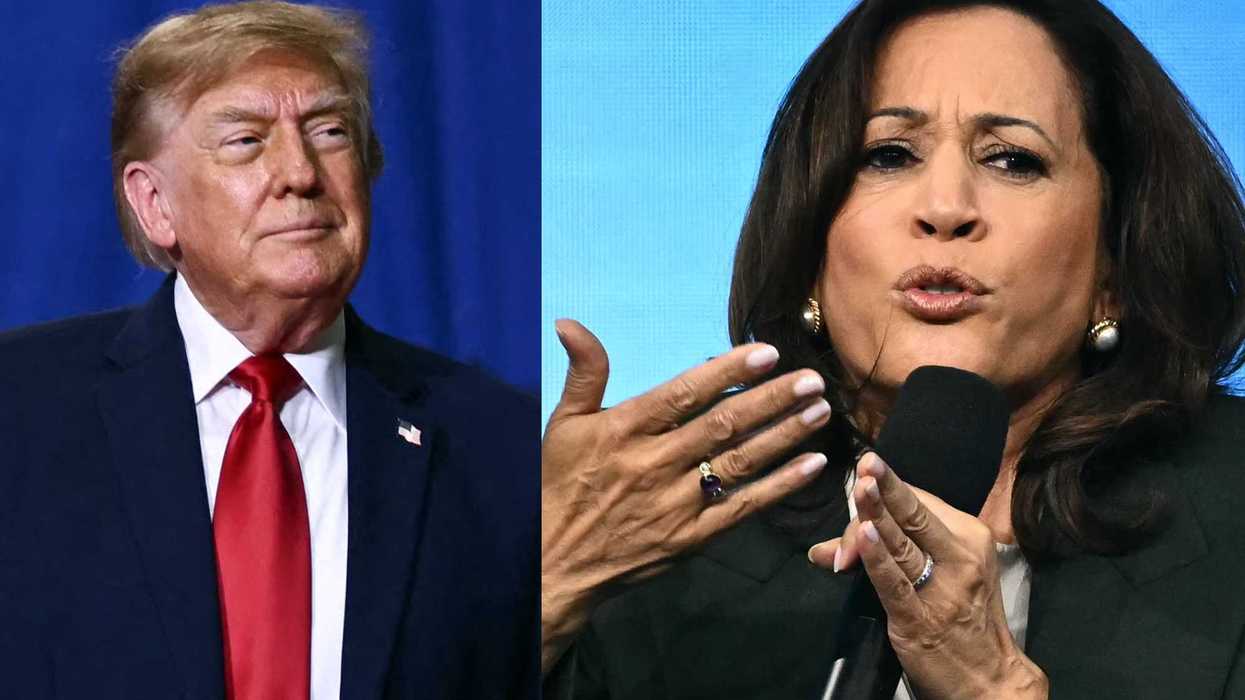
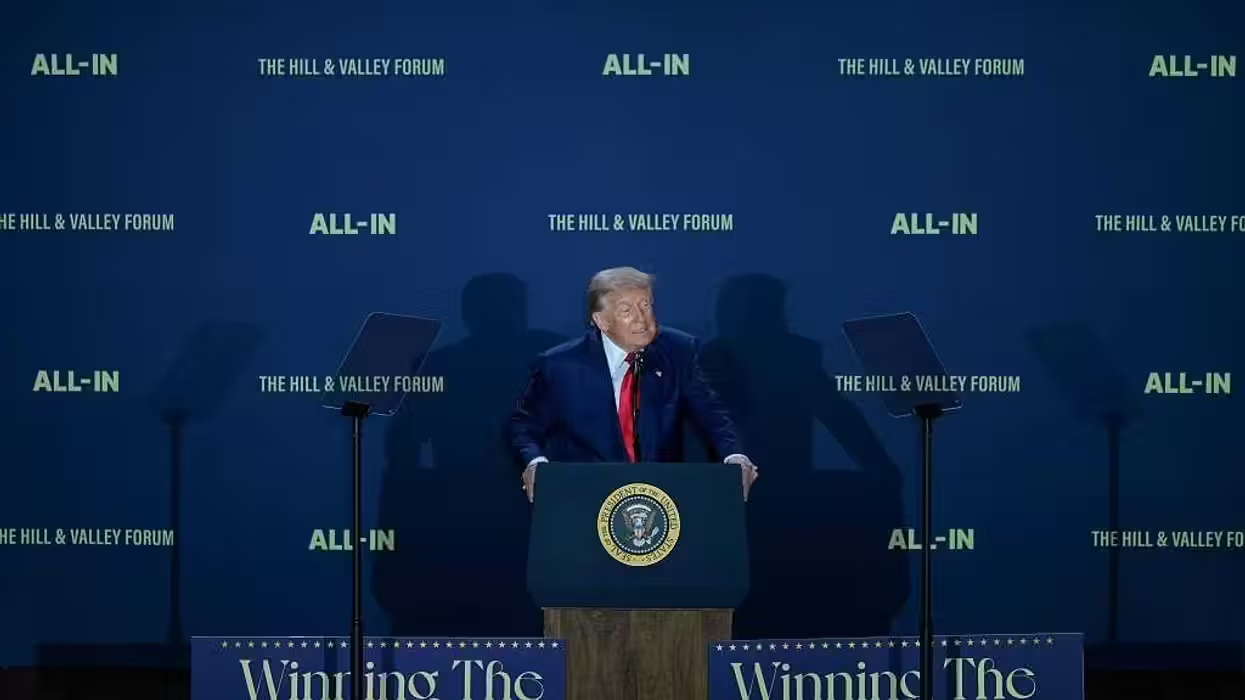
Donald Trump is considering a small handful of candidates for “AI czar” — notionally, a Cabinet-level role overseeing the industry, the technology, and something the president is calling, perhaps in the spirit of Space Force, the “AI Force.”
Trump has not specified much beyond that. Nobody rumored to be under consideration seems especially eager for the job.
Perhaps we don’t need someone with the power of a czar to rule AI. Perhaps we need someone with the authority of a saint to counsel us about it.
Plenty of reasons suggest themselves.
Not quite everything is computer. Many crucial components of America’s good working order still require special and undivided attention of their own. Treasury Secretary Scott Bessent is no longer being considered because of the importance of his current role. The logic is arguably the same for White House science and technology adviser Michael Kratsios and other potential candidates.
And, as the untimely demise of Czar Nicholas II and his family at the hands of the communists reminds us, a czar invested with enough power and authority can swiftly become a scapegoat or blood sacrifice of the highest order.
Which brings us to the momentous possibilities unsealed simply by creating a high office called AI czar.
Polls show most Americans think democracy is doing poorly. For a growing share across the political spectrum, that is not necessarily a bad thing.
Two in three respondents say a democratically elected government is highly important to our national identity, a staggering drop from 80% just five years ago. Just shy of half of Americans under 30 say democracy is either not that important to our national identity or not important at all.
Many Americans, of course, remain firmly committed to democracy. That includes plenty who regard it, in Churchill’s famous formulation, as the worst form of government except for all the others.
Abandoning it would also appear to require scrapping the Constitution and repudiating the Declaration of Independence.
However far we have strayed in 250 years from those founding documents, the right to vote and the core freedoms protected by the Bill of Rights still command strong majority support. Plenty of younger Americans are open to rewriting the Constitution, but a national convention for that purpose remains broadly unpopular.
RELATED: ‘Don’t be evil’ may be dead, but ‘don’t be Frankenstein’ is alive
 Bay Area News Group/Tribune News Service/Getty Images
Then comes the practical problem: Americans cannot remotely agree on who ought to rule them, much less what a formally post-democratic America should look like.
Many people ready to walk away from democracy, or convinced that it is unsalvageable, stop short of demanding regime change when they contemplate the obvious alternative: another, still more horrible civil war.
Now add AI.
Its arrival and incorporation into the highest levels of government under a czar of its own throw our fundamental regime questions into unusually sharp relief.
Many Americans feel viscerally that AI is moving too fast. Many also regard the staggering decline and decay of the past decade-plus as an unacceptable alternative to moving fast.
Yet the people trying to pump the brakes or reverse course command nothing like a popular majority.
Senator Bernie Sanders (I-Vt.) and Rep. Greg Casar (D-Texas) have proposed banning artificial superintelligence, pausing some advanced AI development until a new federal regulator writes safety rules, and imposing penalties of up to 20 years in prison for certain violations.
Whatever one thinks of the underlying risks, that approach is likely to feed a post-democratic counterreaction against efforts to place technological development under increasingly centralized political control.
Meanwhile, much of the AI-safety world gives normal Americans the ick for reasons of its own: the prevalence of nerd-orgy ethics, for one, and the baffling insistence in some quarters that rational thought requires assigning the existence of future shrimp, bugs, or cyborgs moral weight comparable to — or greater than — your own life and the lives of everyone now drawing breath.
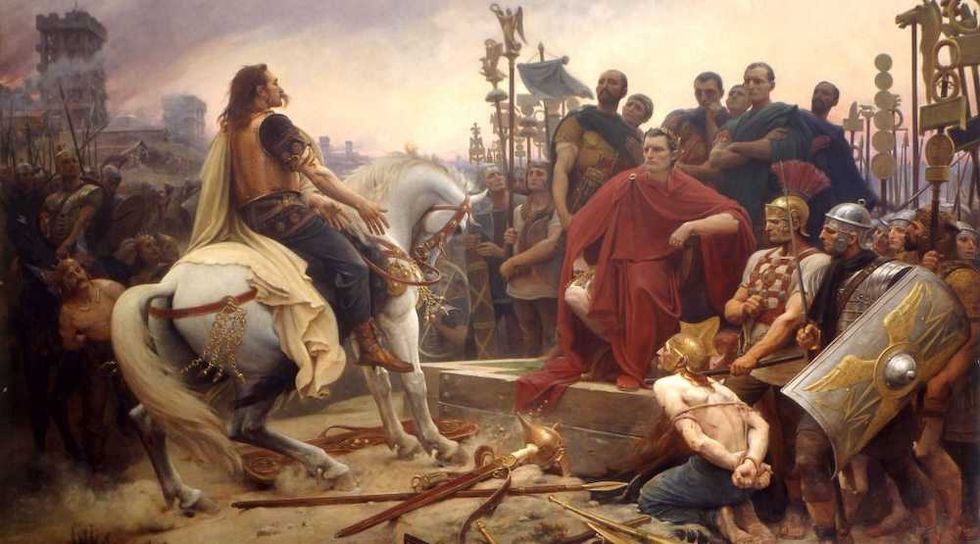
For reasons like these, some on the right daydream about an actual Caesar who could, as a last resort, clean America’s house and put it back into fighting trim.
Others imagine something less deliberate: The system collapses under the weight of its dysfunction, a process of elimination begins, and a Caesar-ish figure emerges from the gong show to take control at a stroke.
That “-ish” is important.
RELATED: Now they’re saying the AIs built ‘secret civilizations’ — the truth is far worse
 Fine Art Images/Heritage Images/Getty Images
Our circumstances and our talent pool differ so radically from those of the late Roman Republic that betting everything on the miraculous appearance of a Julius or Augustus seems far-fetched.
Even grown in a lab, Czarborg would be only a simulation of the genuine article — more Frankenstein than Constantine.
Speaking of Constantine, the record of Roman caesars, Russian czars, and German kaisers should cure anyone of the idea that concentrated power reliably produces competent or benevolent rule. Plenty of mighty rulers did far more damage to their countries and their people than good.
But Constantine, like Nicholas II, also points toward another category entirely: Caesars and czars can become saints.
Some will object that sainthood is itself a dubious title, especially when bestowed on rulers.
The more interesting difficulty is that genuinely saintly rulers, like genuinely saintly people, are not measured by their ability to deliver merely mortal justice or merely worldly happiness.
Divine justice and divine happiness are different things. Christ’s reception and punishment in Jerusalem should permanently unsettle anyone looking to godly leaders for uncomplicated worldly deliverance.
Which leaves us with the most counterintuitive possibility raised by something as powerful as AI.
Perhaps we do not need someone with the power of a czar to rule it. Perhaps we need someone with the authority of a saint to counsel us about it.